
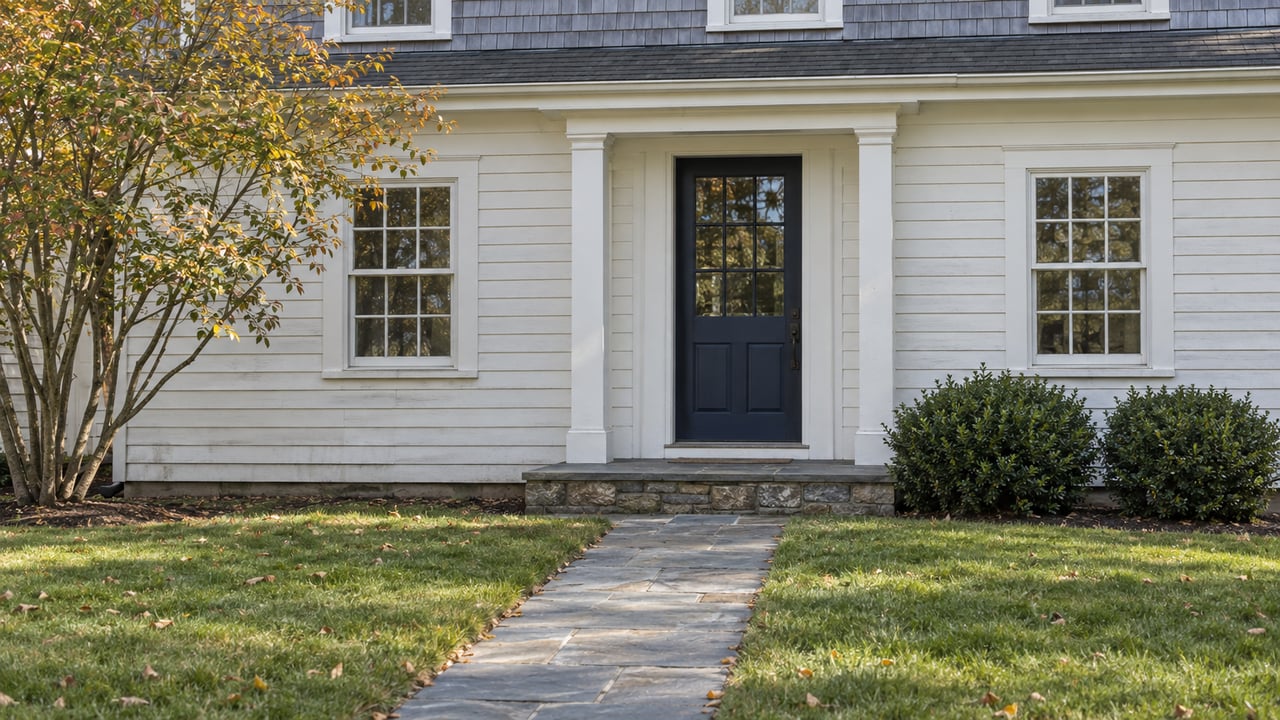
The East Norwalk train station has been closed since September 26. Not for a signal problem or a snowstorm, but on a schedule the Connecticut Department of Transportation has been publishing since 2024: platforms shut down, shuttle buses to South Norwalk pick up the slack, and commuters wait it out. This particular closure runs through October 18, one stop in a four year rebuild that started in March 2024 and won't finish until 2027. If you're touring a house near that station this month, you're seeing the neighborhood at its most inconvenient, not at its baseline.
That timing problem is a small, literal version of a bigger one. Anyone comparing Norwalk to Westport, Darien, or Wilton has already seen a single median price on a portal search. That number describes a city that doesn't behave like one market. It behaves like four, stitched together by a 1921 merger that also left behind a tax structure most buyers never think to ask about until the first bill arrives.
What the closure actually changes, and for how long
The CTDOT project has an official name, TIME-2, short for Track Improvement, Mobility and Enhancement, and it's a sub-piece of the larger WALK Bridge Replacement Program rebuilding the railroad crossing over the Norwalk River. The scope at East Norwalk station includes extending both platforms to hold six train cars, adding new canopies, and building a dedicated drop-off lane with improved parking. None of that is optional cosmetic work. The current platforms and access points are old enough that CTDOT is treating the whole station as due for replacement, not patching.
The northbound side of the station was rebuilt first, with work substantially wrapped by 2025. The southbound side is next, and CTDOT has said that work will begin in late 2026 or early 2027, with at least two more three-week closures before the station is finished. So the closure happening as you read this isn't the last one. Anyone pricing a listing near the station, or touring one, is working inside a construction window that has already run for two and a half years and has more stops ahead of it.
For a seller in East Norwalk, that means acknowledging the disruption is temporary and dated rather than hoping buyers won't notice. For a buyer, it means the property you're touring during a closure week is not showing you its normal commute, and the upgraded station, six-car platforms, new canopies, ADA access, is the version you'll actually own once the work finishes.
Four sub-markets hiding inside one median
Redfin's three month window ending July 2026 put Norwalk's citywide median sale price at $758,000, up 16.6 percent year over year, with homes selling in an average of 27 days and receiving six offers apiece. That reads like a hot, unified market. It isn't one.
South Norwalk, the SoNo arts district around Washington Street, posted its own three month median of $723,000 in the same window, but that number is misleading in a different direction. It's built on just 25 closed sales in July, and it swung 119 percent higher than the same period a year earlier. A jump that size, in a sample that thin, says more about which specific units happened to close than about the neighborhood repricing overnight. SoNo condos and converted lofts also sat on the market for 41 days on average, nearly 50 percent longer than the citywide figure, which fits a walkable, amenity-driven micro-market moving on its own clock.
Move a few miles and the picture changes again. West Norwalk's detached colonials have been trading roughly 10 to 15 percent above the citywide median, reflecting more yard, a quieter street grid, and a commute pattern built around I-95 or the Merritt 7 Metro-North stop rather than downtown walkability. Spring 2026 closed sale snapshots put East Norwalk's median close to $700,000, largely mid-century capes and split-levels near Calf Pasture Beach.
Then there's Rowayton. Redfin's November 2025 data for the Rowayton sub-market shows a median sale price of $2.8 million, up 60.5 percent year over year, but again on a small sample, just 11 homes sold that month. The broader Rowayton price band still lands solidly above $1.5 million for anything on or near the water, and the area's Redfin Compete Score of 79 out of 100 reflects homes selling in around 25 to 30 days, often near or above asking.
| Sub-market | Recent median | Reporting window | Days on market |
|---|---|---|---|
| South Norwalk (SoNo) | $723,000 | 3 months ending July 2026 | 41 |
| East Norwalk | ~$700,000 | Spring 2026 closed sales | not reported |
| West Norwalk | 10-15% above citywide median | 2026 | not reported |
| Rowayton | $2.8 million | November 2025 | ~25-30 |
A buyer who says Norwalk starts in the $700,000s is describing East Norwalk. A buyer who says it starts in the $400,000s is describing a SoNo condo. Both statements are accurate. Neither describes the city, because the city isn't one thing.
Why the aggregators can't agree on whose market this is
Even the data providers disagree on what kind of market Norwalk currently is, and that disagreement is itself informative. Redfin's July 2026 snapshot shows homes selling in 27 days with six competing offers, a classic seller's market signature. Houzeo's June 2026 read of the same city shows homes taking 54 days to sell, 1.35 months of supply, and a sale to list ratio sitting flat at 100 percent, which it characterizes as balanced rather than hot.
Both readings can be true at the same time, because they're each averaging together sub-markets that move at different speeds. SoNo's 41 day, thinly traded condo segment pulls the citywide average toward "balanced." Rowayton's 25 day, above-asking waterfront segment pulls it toward "competitive." Blend them into one median and one days-on-market figure, and you get a number that doesn't match the lived experience of touring in either neighborhood. Pricing a listing to the citywide average is a good way to leave money on the table in one direction or the other, depending on which of the four Norwalks the property actually sits in.
The tax quirk that works backward from what you'd expect
Here's the part that surprises most buyers who've done their homework everywhere else. Norwalk's six taxing districts date to a 1921 merger of what had been separate municipalities: South Norwalk became the Second District, East Norwalk the Third, and Rowayton the Sixth. The Sixth Taxing District still runs itself today, governed by three elected commissioners, currently Alex Sparkman, Jody Sattler, and Andy Meyerson, who hold an annual town meeting on the first Wednesday of every March to approve a budget that now runs around $2 million. The district's own site describes its job as overseeing services the city doesn't provide directly, garbage and leaf pickup, and street lighting.
The natural assumption is that Rowayton, being the priciest sub-market by a wide margin, must also carry the heaviest tax burden. The city's own FY2024-25 mill rate table says the opposite. Downtown, South Norwalk, and East Norwalk all carry a combined rate of 23.5445 mills, built from the base city rate plus a citywide fire charge and a garbage line. Rowayton's combined rate is 22.0516 mills, lower than all three, because the Sixth District opts out of the city's fire and garbage charges and instead funds its own smaller add-on of 1.1773 mills on top of the same base rate everyone pays.
The most expensive houses in Norwalk sit inside one of its lowest combined mill rates, not because Rowayton negotiated a break, but because it built parallel infrastructure a century ago and never dismantled it. Two homes priced identically in different districts can carry meaningfully different annual tax bills, and that difference doesn't show up anywhere on a listing sheet. It shows up on the actual bill, and only after you've pulled the parcel's district assignment from the city's tax records.
What this means before you write an offer
None of this changes whether Norwalk is worth a serious look. It changes what question to ask once you've decided it is. The citywide median is useful for deciding whether to look at Norwalk at all. Once you've made that call, the number to build a budget around isn't the city median, it's the specific sub-market's recent closed sales, the specific parcel's taxing district, and, if you're touring near the East Norwalk station this fall, an honest read on what the finished 2027 station will look like versus what you're seeing during a closure week.
Frequently asked questions
Is Norwalk currently a buyer's market or a seller's market? Depends which Norwalk. Rowayton and the broader citywide averages lean toward sellers, with homes moving quickly and often near asking. SoNo's condo segment runs slower and flatter, giving buyers more room to negotiate on time rather than price.
Will the East Norwalk station construction affect resale value? The disruption is time-boxed. Construction began in March 2024 and is expected to continue into 2027, with the current closure running through October 18, 2026, and at least two more three-week closures scheduled for the southbound platform. The finished station will have longer platforms, new canopies, and improved accessibility, which buyers touring during a quiet, non-closure week should factor in alongside the construction calendar.
How do I find out which taxing district a specific Norwalk property is in? Norwalk's Tax Assessor and Tax Collector maintain parcel-level records showing district assignment and the current combined mill rate. For anything in or near Rowayton, the Sixth Taxing District's own office can confirm boundary and levy details directly.
If you're weighing a SoNo condo against an East Norwalk cape or a Rowayton colonial, the sale price is only half the math. The taxing district and the construction calendar change the other half, and neither shows up on a listing sheet. Fowler & Sakey can pull the combined mill rate and district assignment for any Norwalk address you're considering and show you where it actually sits among the city's four price bands, not just against the citywide median. Start your move with a free home valuation.
This article is general information, not legal, tax or financial advice. Consult a qualified professional about your situation.