
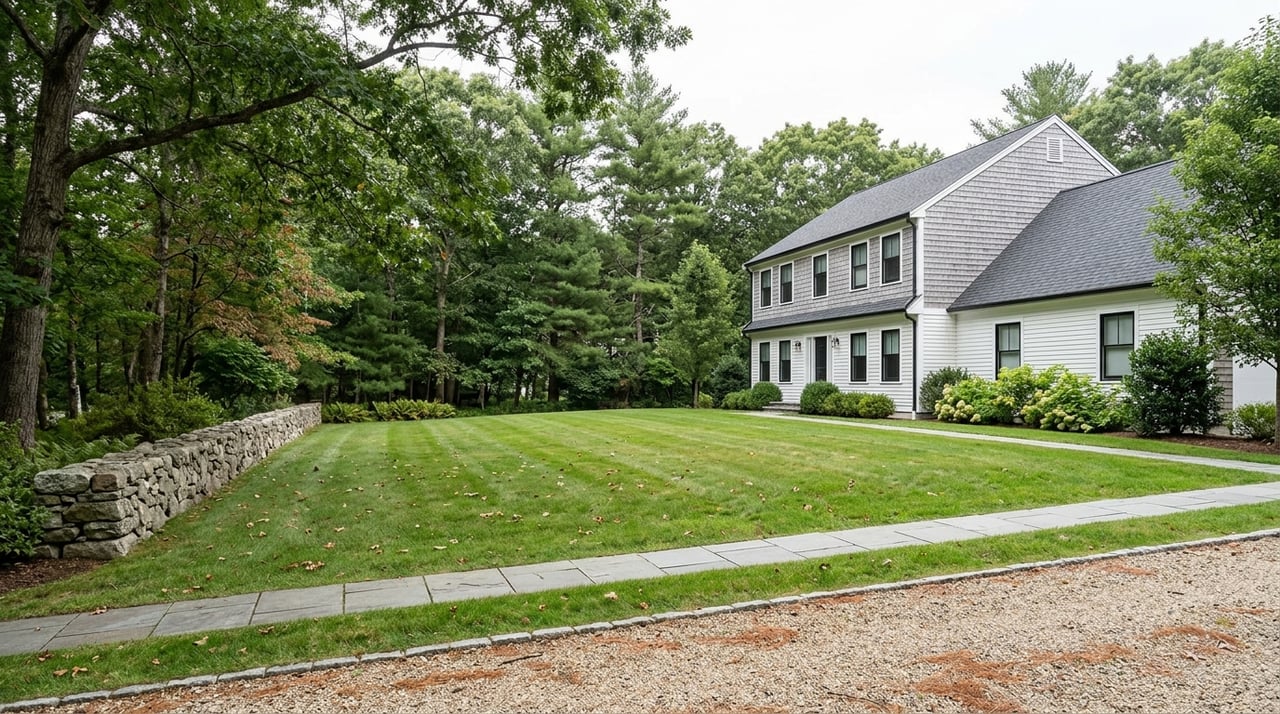
Wondering why two Easton homes with similar square footage can land at very different prices? In 06612, the house is only part of the story. If you are getting ready to sell, you need a pricing strategy that reflects how buyers and appraisers look at land, privacy, condition, and market fit in this uniquely land-rich town. Let’s dive in.
Why Easton pricing works differently
Easton is not a typical high-density suburb where price starts and ends with bedroom count and interior updates. Land plays a major role in value here, and not just the number of acres on paper.
The town covers 27 square miles, has a 2024 population estimate of 7,815, and an 88.1% owner-occupied housing rate. Easton officials also describe more than twenty working farms and note that over one-third of the town is forever preserved, while the open-space plan says water-supply watersheds encompass about nine-tenths of town land. That setting shapes how buyers evaluate property.
In other words, when you price an Easton home, you are pricing both the residence and the way the land lives. A parcel’s layout, privacy, and constraints can influence value as much as kitchen finishes or square footage.
Start with sold comps, not online estimates
Online market data can help you understand the big picture, but it should not be your main pricing tool. In spring 2026, Zillow reported an average Easton home value of $966,836 and a median list price of $1,204,750, while Realtor.com reported a median listing price of $1.195 million, 29 homes for sale, 22 median days on market, and a 100% sale-to-list ratio.
Redfin showed a $1.31 million sale price and 40 days on market, but only four homes sold in that sample. Because each platform measures something different, these numbers are best used as context, not as the final answer for your home.
The strongest starting point is recent closed sales that truly resemble your property. In Easton, that means matching not just the home itself, but also acreage, usability of the land, setting, and overall condition.
Why sold data matters most
A listing price tells you what a seller hoped to get. A closed sale tells you what a buyer and seller actually agreed on, and what a lender-supported deal could sustain.
That matters even more in a low-volume market like Easton. With fewer sales, every truly comparable closing carries more weight than broad automated estimates.
Usable acreage matters more than total acreage
This is one of the biggest pricing mistakes sellers make in Easton. More land does not automatically mean a proportionally higher value.
Easton has two residential districts. The zoning regulations set a minimum lot area of 40,000 square feet in Residence A and 3.0 acres in Residence B, while also identifying wetlands, floodplain, prime farmland soils, ridgelines, scenic views, and similar areas as conservation concerns.
That means total acreage, buildable acreage, and usable acreage are not the same thing. A larger parcel with meaningful constraints may not outperform a smaller parcel with a more functional homesite and better day-to-day use.
What buyers often value on the lot
When buyers compare Easton properties, they often focus on how the land feels and functions. Features that can shape value include:
- Open and usable yard area
- Privacy from the road or neighboring homes
- Clear siting for outdoor living
- Land that supports easy maintenance and enjoyment
- Room for typical residential use without obvious site limitations
A three-acre property with a clean, open setting may compete better than a three-acre property where much of the land is affected by wetlands, slope, or other constraints. That is why acreage alone is too simple for this market.
Privacy and site feel can influence value
Easton’s zoning framework aims to protect the town’s rural and residential character, property values, and water resources. In practical terms, that helps explain why privacy, buffering, road exposure, and overall site feel matter so much when buyers compare homes.
Two houses with similar size and condition can perform very differently if one sits quietly off the road with a strong sense of retreat and the other feels exposed or less cohesive with the land. This is not a formal pricing rule, but it is an important local market reality.
If your home offers a distinctive setting, that should be reflected in the pricing conversation. It should also be documented clearly in how the property is presented to buyers.
Condition still matters in a land-rich market
Land matters in Easton, but the house still has to compete. Fannie Mae notes that comparable sales should account for site, room count, finished area, style, and condition.
That means a well-kept home with updated systems, functional living spaces, and a coherent floor plan can outperform a larger but dated property if the lot and location are otherwise similar. Buyers are not just buying land. They are buying how comfortably and confidently they can move in and live there.
Areas that can affect pricing position
Before setting a list price, it helps to evaluate how your home compares on the basics buyers notice first:
- Overall maintenance and care
- Age and condition of major systems
- Kitchen and bath updates
- Layout and room flow
- Finished living area and usability
- Architectural consistency and curb appeal
You do not need every finish to be brand new. You do need a realistic sense of how your home stacks up against the recent sales buyers will use for comparison.
Tax assessment is not market value
Many sellers look at their assessment and assume it is a shortcut to pricing. In Easton, that can lead you off course.
The town assessor explains that appraisers look at location, condition, age, size, and quality of improvements, and Connecticut assessments are set at 70% of fair market value. That means your assessment is not the same thing as current market value.
It can be one useful data point, but it should not drive your list price. The market decides value based on how your property competes with recent sales in Easton.
How appraisers may handle a unique Easton home
If your property is uncommon for the area, pricing needs to account for how an appraiser may view it later in the transaction. This is especially important in Easton, where larger lots and lower sales volume can make clean comparisons harder to find.
Fannie Mae says appraisers should use comparable sales from the same market area when possible, and at least three closed comparables are required in the sales comparison approach. Neighborhood sales are the best indicator of value.
Easton may require a wider comp search
For rural properties or markets with limited inventory, Fannie Mae allows older or more distant comparable sales when recent true matches are scarce, as long as the appraiser explains why they were used. That is highly relevant in Easton.
If your home sits on a larger or more complex parcel, the appraiser may need to go beyond the most recent nearby sale to find a better match. This is one reason overpricing based on a single standout listing can create problems later.
Typical residential use matters
Fannie Mae’s appraisal guidance also says lenders focus on zoning, present land use, and whether the property is a typical residential site in the market area. If the site is significantly larger than the comparable properties, the lender may question whether it is typical for that market.
That does not mean a larger parcel has no value. It means the pricing strategy should be grounded in what the market is likely to support, especially if the extra land does not translate into equal additional utility for a buyer.
What to prepare before pricing your Easton home
A strong pricing strategy starts with a clear understanding of your property’s land story. That includes not just acreage, but what parts of the site are functional, constrained, or especially appealing.
Easton’s assessor makes property cards available online, which can help confirm lot details before a pricing discussion. For larger parcels, it is smart to be ready to explain which areas are usable, which may be affected by site constraints, and how the home sits on the land.
Your pre-pricing checklist
Before you go to market, gather and review:
- Recent sold homes that match your lot profile and house style
- Basic lot details from the property card
- Any known information about wetlands, floodplain, or other constraints
- A realistic summary of your home’s condition and updates
- Key features that support privacy, usability, and site appeal
This prep work helps create a more accurate price and a cleaner story for buyers, agents, and appraisers.
The real goal: market fit
In Easton, the best list price is not the highest number you can justify on paper. It is the price that fits the local market, reflects usable land and home condition, and makes sense to both buyers and lenders.
A simple acreage-only formula will miss the mark in this town. The market tends to reward usable land, privacy, condition, and strong local comparable sales, while appraisers may need to adjust for rural site differences when Easton comps are limited.
If you are preparing to sell in 06612, a careful pricing strategy can protect your momentum and your negotiating position from day one. For thoughtful, local guidance and a tailored home valuation, start your move with Fowler & Sakey.
FAQs
How should you price a home in Easton, CT?
- You should start with recent closed sales that match your home’s condition, setting, and land usability, rather than relying mainly on online estimates or raw acreage.
Does more acreage always raise home value in Easton?
- No. In Easton, usable acreage often matters more than total acreage because wetlands, floodplain, slopes, and other land constraints can limit how buyers value the parcel.
Do tax assessments reflect market value in Easton, Connecticut?
- No. Easton assessments are set at 70% of fair market value, so they are not the same as current market value for listing purposes.
Why can two similar Easton homes have different prices?
- Differences in privacy, site feel, road exposure, usable yard space, home condition, and floor plan can lead buyers to value otherwise similar homes differently.
How do appraisers evaluate unique properties in Easton?
- Appraisers typically begin with local comparable sales, but in a low-volume market like Easton they may use older or more distant sales if truly similar nearby comps are limited and they explain the reasoning.
What should sellers gather before pricing an Easton property?
- Sellers should review recent sold comps, confirm property card details, understand any site constraints, and prepare a clear explanation of the lot’s usable and marketable features.